
Cultivating Vulnerability
The Gift of Honesty, Openness, and Trust in God

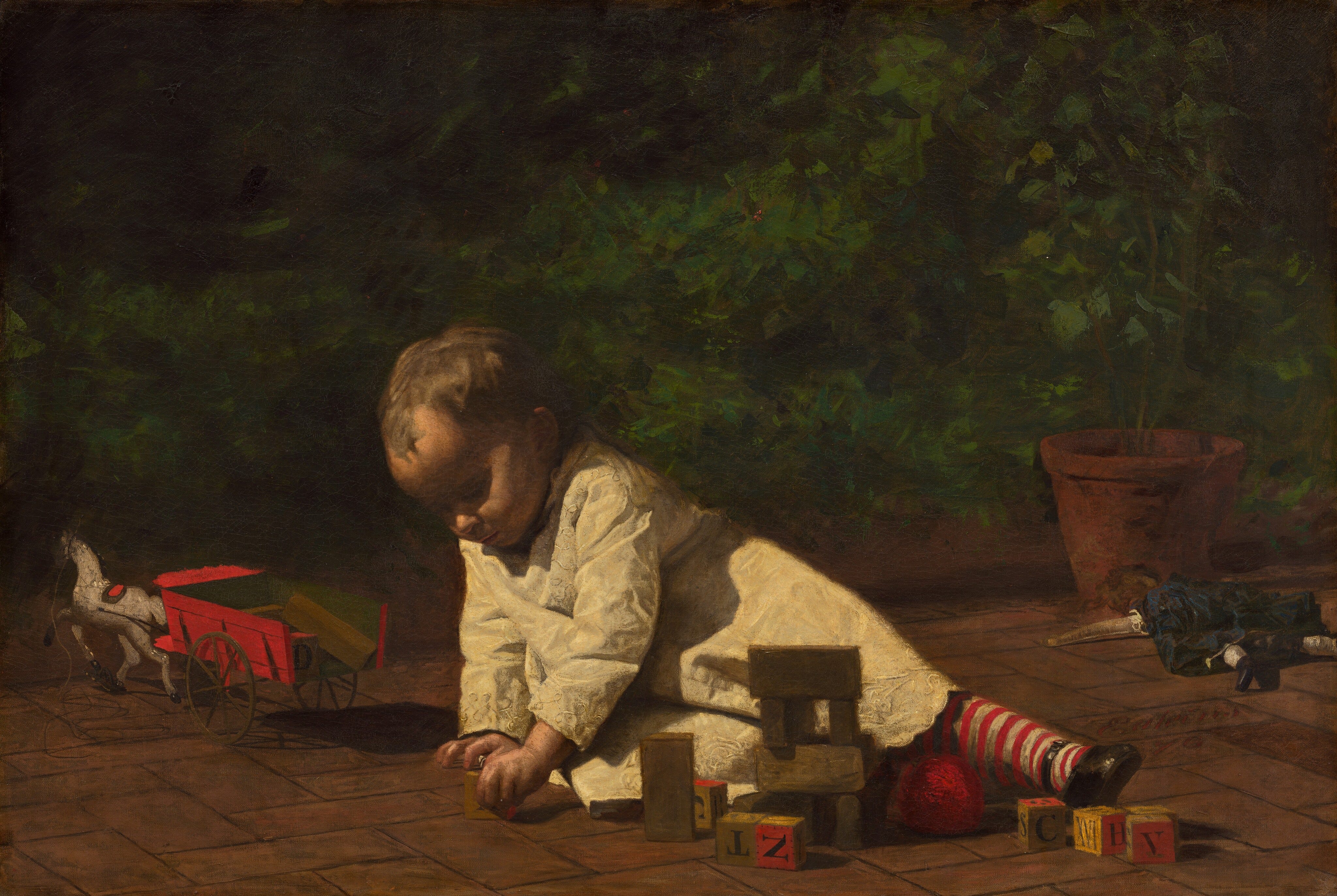
When my husband and I had completed our home study and were preparing for the possibility of adopting a child, we anxiously awaited a phone call from our agency. We had convinced ourselves that the call would come “any day now,” or in other words, soon. We felt uneasy being away from our phones and did not want to travel out of state, imagining a scenario in which we would need to rush to the hospital on a moment’s notice. As it turns out, things did not go the way we imagined. (Spoiler alert: they seldom do)! Months went by and the reality set in: we had no idea if we would ever be matched with or placed with a child. Our hopes and dreams to one day become parents felt as though they were held by the thinnest of threads which threatened to be cut at any moment.
We had twice experienced the “near miss,” of hearing about a child going up for adoption only to find out that either someone else was chosen to raise the child or the mom decided to keep her baby. As painful as it was, we were expecting some disappointments and the chance of being let down. What we were unprepared for was the silence. Months of silence. No news at all.
As the silence seemed to thicken into a heavy cloud of despondency, my husband and I decided to pray a novena to Our Lady of Champion, asking for the grace to be able to adopt. Not long after, we heard about a biological mom wanting to make an adoption plan. She was looking for a couple with no children, who could not have any of their own, and that had one pereson at home full-time. We held our breath. I cried.
In the weeks that followed, phone calls awakened hope. We hoped to meet the mom. We hoped she would look at our profile book. We hoped she would choose us. We also hoped that the biological dad would be supportive of an adoption plan. As it turns out, he wasn’t. The wait continued. As the adoption agency prepared to meet with the biological dad, I prayed that the dad would change his mind and move forward with adoption. I got the call. Dad was going to keep the baby.
I finally cried out to God with tears, frustration, and deep heartache: “You could have changed that dad’s mind, but you didn’t. You must not want us to be parents.” The situation that felt perfect had fallen-through and there was nothing left to hope for. I felt forced to return into the heavy silence that crushed our hopes of parenthood, while being bombarded online with the sickening trend of people in our culture promoting “shout your abortion,” with glee. The contrast of the disdain for parenthood and our terrible, tearful longing for it could not be more vivid.
I share all of this because little did I know that this one vulnerable moment of prayer with God, in which I spoke from the rawness of an aching heart, would end up becoming a moment of grace. God proved me wrong. He did want me to become a parent. In the end, the biological dad did end up changing his mind and becoming open to adoption. The agency called us to prepare us. We were moving forward with reserved, tentative steps. The baby was coming due in a few weeks.
Fast forward to today and that baby is our sweet, wonderful 1-year-old son. We were blessed to become his parents through adoption. We also have an open adoption with our son’s biological mom and dad. All of this is amazing. Our vulnerability in entering the adoption pool and in praying from a place of longing had paid off, but now we face a new choice and a new layer of vulnerability. Do we try again?
The other night, as I joined my husband in prayer for the grace to adopt again, I was surprised by the tears that choked out my prayers. Fear welled up in my heart as I thought about completing a new home study and entering the adoption pool once more. What if we are not matched? What if we try and fail to adopt a second child? When I shared these fears with my husband, he reminded me of what I had said to his cousin who miscarried the baby she longed to hold in her arms: It hurts so much because you are a mother and you know what you are missing. In a similar way, somehow the vulnerability required to hope to adopt a second time feels more intense now that I am already a mom.
Vulnerability of Heart
Vulnerability is a quality of heart that allows itself to be wounded. In fact, the word “vulnus,” in Latin, means wound.1 On Easter, Jesus appeared to the apostles in His vulnerability, that is, in His wounds. His wounds were proof of His authenticity—that it was truly Him, really alive, risen from the dead. To alleviate the doubts of St. Thomas, Jesus invited contact with His wounds, “Put your finger here and see my hands, and bring your hand into my side, and do not be unbelieving but believe.”2 Vulnerability is a quality of Jesus’ heart and He asks us to share that quality.
Vulnerability of heart can be a challenging quality to cultivate for many reasons. For one, it is a natural tendency to close in like a turtle retreating to its shell and self-protect when one is wounded, rather than expose and show the wounds. In addition, many notions around valued character traits such as “strength,” and “resilience” mistakenly look at vulnerability as a liability rather than an asset. In this kind of culture and with this mindset, asking for and receiving help could be looked down on as “burdening” someone or being “too needy”. Sharing one’s griefs or struggles could be seen as “complaining” or being “ungrateful”. Admitting one is even wounded could jeopardize the desire to appear invincible, untouched, unscathed, or superior to someone else. Pride aside, there are plenty of reasons to avoid vulnerability.
Children who grew up in a home with abuse, alcoholism, drug use, divorce, or other forms of dysfunction tend to see vulnerability as dangerous because they experienced wounds that were inflicted by parents or by the very people they should have been able to trust to tend to their wounds and bring healing. Children should have their wounds welcomed and healed by loving parents or attentive caregivers. Wounds deserve care. They require healing.
Adults too, can be wounded. Disappointments, betrayals, tragedies, traumas, loss, personal failures, or the sins of others inflicted upon us are all examples of sufferings that can truly crush a heart. Even then, we are reminded, “The Lord is close to the broken hearted, saves those whose spirit is crushed.”3 Can we be vulnerable and share our pain, openly and honestly with the Lord? Jesus asked that St. Faustina write this invitation in her diary of Divine Mercy:
“Poor soul, I see that you suffer much and that you do not have even the strength to converse with me. So I will speak to you. Even though your sufferings were very great, do not lose heart or give in to despondency. But tell Me, my child, who has dared to wound your heart? Tell me about everything, be sincere in dealing with Me, reveal all the wounds of your heart. I will heal them, and your suffering will become a source of your sanctification.”4
Wounds that are not healed tend instead to become hardened. Just look up the term “eschar,” to understand what that looks like. This darkened, hardened layer can form over the wounds of our hearts. While we don’t want our hearts to become hardened and infected, unhealed and unattended to, vulnerability can feel dangerous and unsafe when it has not been welcomed and reverenced like the wounds of Jesus were before the apostle St. Thomas.
Vulnerability is hard to learn and practice. Thankfully, there are some in our culture who are honoring the place of vulnerability. Author and researcher, Brené Brown, has spent years of her life dedicated to promoting the importance of vulnerability. She writes, “Vulnerability is not weakness, and the uncertainty, risk, and emotional exposure we face every day are not optional.”5 This is hard lesson I had to learn. Thankfully, my therapist had the patience to teach it to me over the course of many sessions. I remember sitting in his office on more than one occasion while we gently explored the fears I held in my heart: the fear of openly grieving my losses, the fear of getting life wrong, the fear of missing my vocation, the fear of becoming a wife or mother. As my walled-off heart began to heal and my guarded heart relax, I allowed myself to love and be loved.
It was from a very wounded, guarded heart that I once begged Jesus not to entrust my heart to anyone else. The very pious phrase we sometimes hear as Catholics, “God alone,” was distorted and twisted by my wounds and translated interiorly for me as a disposition of unwillingness and inability to rely on anyone else without a sense of guilt or shame. During my spiritual direction residency at Divine Mercy University, I honestly felt relieved and understood when my teacher told me that she had also experienced “need” as “a four-letter word,” in other words, a bad word. My therapist spent many a session trying to teach me that “need,” was not a word to be hated, feared, or reduced to solely matters of food and water.
When I begged Jesus to not entrust my heart to someone else (ie: to not be called to marriage), He listened with care and concern. He later showed me something that would change my perspective immensely. Instead of seeing marriage as a rivalry to my friendship with Christ and a risk too great to consider, Jesus opened my heart and blessed my path towards marriage. In prayer, he showed me two gems, beautiful and unique, which came together and united in His Heart. From this, I understood what the Sacrament of Marriage was meant to be—a union of love in the Heart of Christ.
Vulnerability of heart is a quality that Jesus loves. He said, “let the children come to me,”6 not “let the self-sufficient grown-ups come to me,” although they should too! When I left religious life and entered back into the world, it took embracing vulnerability to begin the process of opening my heart to the possibility of marriage as a vocation. When I met my now-husband, Michael, it took levels of vulnerability I did not even know were possible to be open to talking on the phone, meeting in person, dating, getting engaged, and walking down the aisle. Yet, the deeper I went into my vulnerability and risked love, the greater was my peace.
When I walked down the aisle on my wedding day, although the social-distancing tape was up, guests were at a minimum, and some family members were sadly missing because of the world-wide Covid pandemic, I still felt like I was swimming in an ocean of peace. Vulnerability had prepared my heart to trust in God and in the man who would become my spouse. Vulnerability allowed me to risk and to love, without knowing everything that would come. Vulnerability was a gift that taught me how to be honest, open, and to trust in God, even when He led me on an unexpected path or when the circumstances were challenging.
Jesus not only calls us to vulnerability of heart, He models it for us. Jesus was willing to experience challenges and pain. He never allowed these things to harden His Heart. Look at the men he chose as apostles, after an entire night of prayer to God.7 One of them betrayed him. One of them denied him. Most of them fled when He was arrested and tortured and condemned to death. Only one stood at the foot of His cross. Yet He chose them, revealed Himself to them, and called them friends.8
Jesus was vulnerable of heart, allowing Himself to be moved by the sufferings around Him. He did not harden Himself before the needs of others, but felt compassion for them.9 That Greek word for “compassion” is extraordinary: σπλαγχνίζομαι, splagchnizomai, which sounds like “splah-kneeg-zoah-my,” literally means having one’s guts moved with pity.10 I can appreciate this word. As someone who holds a lot of stress in my stomach, and is familiar with emotional indigestion, the fact that Jesus is vulnerable in this way helps me feel even more connected to Him in His humanity.
Honesty, openness, and trust are the foundations of a good friendship. Building these foundations takes time and the willingness to be vulnerable and grow in intimacy. The hesitancy and resistance we can experience to being vulnerable is understandable, yet Jesus invites us to move closer to Him without fear. In his encyclical letter, Dilexit Te, on the Sacred Heart of Jesus, Pope Francis writes:
If we find it hard to trust others because we have been hurt by lies, injuries and dissapointments, the Lord whispers in our ear, ‘Take heart, son!’ (Mt 9:2), ‘Take heart, daughter!” (Mt 9:22). He encourages us to overcome our fear and to realize that, with him at our side, we have nothing to lose… Let him draw near and sit at your side. There may be many people we distrust, but not him…11
If we dare to respond to Jesus’ invitation to come to Him and learn from Him, to take His yoke upon our shoulders and find rest, we might be surprised.12 For those who are accustomed to resisting their vulnerability, the price of exhaustion can be high. Rest might be, in the end, what we have been lacking.
What might it feel like to finally lay down the yoke of perfectionism and take up the light yoke of Jesus? Or the yoke of indifference? Or the yoke of avoidance? Or the yoke of invincibility? Or the yoke of pride? A vulnerable heart is a humble heart. A humble heart is a light heart, a heart that knows how to rest in the love and mercy flowing from the heart of Christ.
One way that Jesus models vulnerability and invites us to enter His experience is by living as a son or daughter of the Father. Jesus is completely dependent upon the Father. Every word, every gesture, every miracle Jesus performs is related to the Father. Jesus explained His lived reality in this way: “A son cannot do anything on his own, but only what he sees his father doing, for what he does, his son will do also.”13 Imagine the level of vulnerability that Jesus had before the Father when He prayed during His agony in the garden, “Father, if you are willing, take this cup away from me; still, not my will but yours be done.”14 Into this depth of vulnerability, Jesus invites St. Peter, during a post-resurrection encounter: “… ‘when you grow old, you will stretch out your hands, and someone else will dress you and lead you where you do not want to go.’ He said this signifying by what kind of death he would glorify God. And when he said this, he said to him, ‘Follow me.”15
Following Jesus means embracing vulnerability even unto death. Could it really be any other way? Yet with that vulnerability comes the joy of being deeply loved and known by God. I’ve always been fascinated by the verse from the letter to the Hebrews that says, “For the sake of the joy that lay before him [Jesus] endured the cross, despising its shame, and has taken his seat at the right of the throne of God.”16 Joy is the descriptive term used to indicate that even in the midst of His deepest sufferings, the Heart of Christ did not lose sight of His intimacy with the Father. The same gift can be given to us through faith because the truth is: “What eye has not seen, and ear has not heard, and what has not entered the human heart, what God has prepared for those who love him,” this God has revealed to us through the Spirit.”17 Through the Holy Spirit we can live as beloved sons and daughters of the Father. Vulnerability of heart is a path that shows us the way to this intimacy.
Questions for prayer and reflection:
When you read or hear the word “vulnerability,” what stirs within you? What comes to mind?
Matthew Kelly, in his book, the Seven Levels of Intimacy, writes,
“We are afraid to reveal ourselves, afraid to share ourselves, afraid to allow others into our hearts, minds, and souls. We are afraid to be ourselves. We are afraid that if people really knew us they wouldn’t love us. That is the deepest of all human fears, lurking in the heart of every person.”18
How has this been true for you? What makes you either avoid or embrace vulnerability?
In the Seven Levels of Intimacy, Matthew Kelly writes,
“it is only by truly experiencing intimacy that we come to realize what a great need we have as humans to be really listened to, to be taken seriously, to be accepted, encouraged, and understood… If you are unwilling to embrace the challenge of making yourself vulnerable, intimacy will elude you until circumstances or necessity convinces you to change your mind. Intimacy is unattainable for those who refuse to take the risk of making themselves vulnerable…”19
Who knows you the most intimately? How much of you do they know? What do you share? What is it like to be vulnerable?
Matthew Kelly’s list of the seven levels of intimacy include the sharing of opinions, hopes and dreams, feelings, faults, fears, failures, and needs. Which of these do you have the hardest time sharing with someone or being vulnerable about?
What is one way God is inviting you to honesty, openness, and trust this week?
Cf. Dawn Eden Goldstein, The Sacred Heart: A Love for All Times. (Loyola Press, 2025), Introduction, xi.
John 20:27, New American Bible Translation (NAB)
Psalm 34:19, NAB
St. Maria Faustina Kowalska, Diary of Divine Mercy in My Soul, (Marian Press), #1487
Brené Brown, Daring Greatly: How the Courage to be Vulnerable Transforms the Way We Live, Love, Parent, and Lead. (Avery/Penguin, 2012), p.2
Matthew 19:14, NAB, emphasis mine.
Cf. Luke 6:12-16
John 15:15, NAB
Cf. Matthew 9:36
Blue Letter Bible. Accessed online: https://www.blueletterbible.org/lexicon/g4697/kjv/tr/0-1/
Pope Francis, Dilexit Nos, On the Human and Divine Love of the Heart of Jesus Christ, (2024), #37
Cf. Matthew 11:28-30
John 5:19, NAB
Luke 22:42, NAB
John 21:18-19, NAB
Hebrews 12:2, NAB, emphasis mine
1 Corinthians 2:9-10, NAB
Matthew Kelly, The Seven Levels of Intimacy: The Art of Loving and the Joy of Being Loved,(Beacon, 2005), p.13
Ibid. p.189
Beautiful essay, Emily!
Beautifully written!!! I love the content, every bit of it.